Cart


Lab Processing Times

When a child develops crooked or misaligned teeth, it’s easy to assume that the reason is genetic or spontaneous (that’s just how the teeth grew). In fact, the culprit is often the tongue!

You know how a couch cushion can warp over time to fit the body that sits in it the most often? Teeth are the same way. The tongue – one of the strongest muscles in the body -- exerts constant pressure on the teeth. This pressure serves to gradually shape the teeth over time. If the pressure or posture of the tongue is abnormal, children can develop an overbite, open bites, big spaces between teeth, and even crossbites.

Abnormal tongue posture can be corrected in a variety of ways. Sometimes, a child…

   Read More 

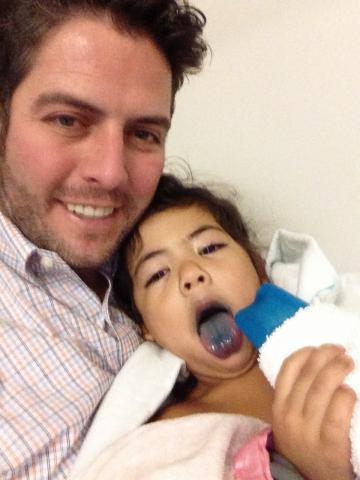
The tonsils and adenoids were removed. (BREATHE). Several days of popsicles for breakfast, lunch and dinner ensued. It was rrrrrrough (more for my wife and myself), but Grace did it. As far as I was concerned the hard part was over.  Afterall, now that the hard part was done, finding someone to treat her should be a slam dunk!

Famous last words. 

As with most professions, there are many different schools of thought when it comes to treatment. For a very long time, orthodontics performed in the United States was focused on ensuring straight teeth and correcting specific occlusion in relation to the opposing arch. It was an art of form and function. If teeth needed to be extracted to accomplish fit,…

   Read More 

If you have something wrong with your teeth, you may wonder whether to call an orthodontist or a dentist. Both work with teeth, so it can sometimes be a little confusing.

So let’s keep it simple.  A dentist is a generalist, like your primary care doctor. Dentists help you keep your teeth clean and healthy -- preventing tooth decay; performing root canals; detecting gum disease; placing crowns, bridges, and veneers; even professionally whitening your teeth.

An orthodontist is a specialist, like a cardiologist. Orthodontists have received additional training in specific aspects of dentistry. They focus on tooth alignment problems. Typical orthodontic problems include crowded teeth, missing teeth,…

   Read More 

You’re a dentist…but you must also be a savvy business owner. After all, you can be the best dentist in the world, but if you can’t pay the bills, your dental skills won’t matter one bit. A smart dentist knows that one key to increasing profit is to cut back on unnecessary chair time.

There are many ways to do this. Your assistants can handle the lion’s share of standard cleaning and prep work, yet many procedures require you at the helm. In these instances, saving time on procedures – without lowering the quality of the outcome – can save you money and make your practice more profitable.

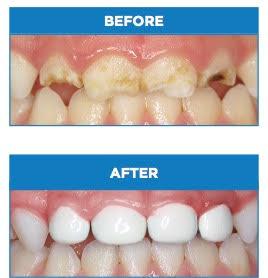
At SML Global, we offer pre-crimped crowns that are also pre-contoured. Our high-quality, stainless steel…

   Read More 

The following is a series of blogs to explain the situation of pediatic airways disorders and my Daughter Grace's journey through the process of diagnosis and treatment.

GRACE’S JOURNEY: THE WAY TO AN OPEN AIRWAY, PART II

GRACE’S JOURNEY: THE WAY TO AN OPEN AIRWAY, PART I

TONSILS AND ADENOIDS REDUX: SAVING GRACE

AIRWAY AND ENVIRONMENT: GRACE’S BATTLE TO BREATHE

SNORING AND SLEEP APNEA: OBSERVATIONS, OVERLOOKS AND MY GIRL GRACE

PEDIATRIC AIRWAY DISORDERS: SNORE WARS

SLEEP, HEALTH AND PEDIATRIC AIRWAY DISORDERS: MY EYES ON GRACE

THIS IS THE FACE OF A PEDIATRIC AIRWAY PROBLEM

GRACE’S JOURNEY: THE SEARCH FOR “AIRWAY FIRST”

   Read More 

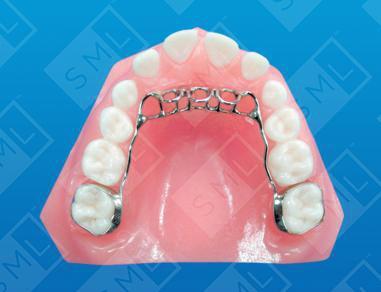
pedo_0Try thinking about dentures without visualizing an elderly person putting in their teeth in the morning or taking them out and dropping them into a glass of water at night. Go ahead.
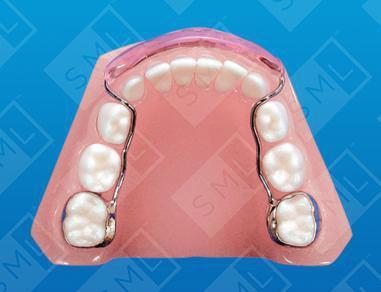

The truth is, dentures may become necessary at any age.

A bad fall, a violent hit during a sporting game, excessive tooth decay or entire host of accidental trauma scenarios…all could potentially create the need for tooth replacement. And yes, even young children may need dentures or pediatric partial dentures.

This might well raise the question of whether a pediatric partial denture is even necessary, given that the child’s adult teeth will eventually grow in. While this is true, your child needs the use of his or her teeth in the meantime. Missing multiple teeth can make it difficult for a child…

   Read More 

Lip Biting_0_2

If My Child’s Baby Teeth Are Crooked, Will Their Adult Teeth Be Crooked Too?

Your child’s baby teeth, known in the dental world as their primary dentition, have come in…and they’re crooked! Does this mean that their adult teeth will be crooked too?

Not necessarily. It depends on what caused the misalignment (s) in your child’s primary dentition. As children grow and develop, if there is not enough room for the adult dentition then teeth can crowd as they erupt.  It is important that there be room for all 32 teeth, so as children grow providing optimal conditions for this to happen is imperative not only for “straight teeth” but also proper development and function.  That is something that will probably reoccur with adult teeth…but once corrected,…

   Read More 

Final Retention: Shift Happens – the Need for Indefinite RetentionBlog Graphic _all_1At the risk of overdoing it in the “glib” department, “Shift Happens”.  As discussed in our last series, “Grace’s Airway Adventures,” the human mouth was originally designed to comfortably house all 32 teeth. For a number of reasons, over the years we have lost that spacing – evolved (or devolved) to a point where we require various forms of assistance to achieve that genetic potential. 

Hence, Orthodontics.

The esthetics of broad smiles and straight teeth are what your patients most desire --either for themselves or their kids. Healthy, uncompromised airways are the major consideration prior, during and after treatment.

But shift happens.  Patients, forget to wear their…

   Read More 

Final Retention:  There’s More Out There Than Just A Hawley. 

Blog Graphic _all2_0Excepting most notable Pizza and Ice Cream, there are pros and cons connected with most life choices. Agreeing that final retention is indefinite, you have to decide what is going to work best for you and your patient.  To begin, we have classified retention appliances into three categories: Fixed, Removable and Active Retention.

Let’s walk through a few options in the fixed category. 

Fixed appliances are either cemented or bonded in place. The best reason for a fixed approach is that compliance isn’t an issue. The biggest negative is that the patients needs to learn how to floss and properly clean around their appliances. .If a patient is not vigilant, periodontal…

   Read More