



 As it turns out, many tooth and jaw problems, such as overbite and underbite, are genetic. If a parent had a malocclusion that required correction with braces, it is likely that at least some of their children will have the same condition. As soon as a child’s baby teeth start falling out and their permanent teeth grow in around the ages of six and seven, problems may become apparent.
As a dentist you may notice that your patients teeth are growing in crooked, or that they overlap, or the child simply has a bad bite. As soon as all the permanent teeth grow in, the child is a candidate for correction. This may be as early as the age of seven. If the problem isn’t overly severe, the parents may want to wait until the child is more…
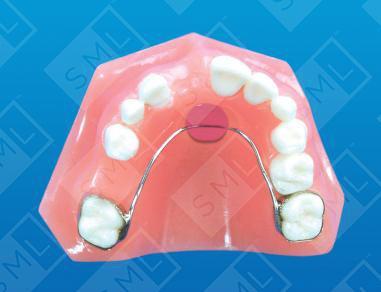 When a patient loses their primary maxillary molars early, there is a distinct risk that the adult molars will tip and drift forward. This may, in turn shorten the length of the arch, block the normal eruption of the bicuspids, and create a significant malocclusion. The result ...Crooked teeth, a poor bite, the the need for orthodontics, and further difficulties (like sleep apnea) caused by a diminished intra-oral volume.
 Modern dentistry is amazing and you now have alternatives to plaster study model case documentation? SML provides you with an ultra-accurate, high-resolution digital study model that is securely stored and backed up on our servers. You are assured rapid, on-demand retrieval – no office storage space required.
 As a dentist you can only do so much to keep your patients’ teeth and gums healthy. When a patient comes in, traditional scaling and root planing is S.O.P. to remove plaque and tarter and reduce bacteria buildup.
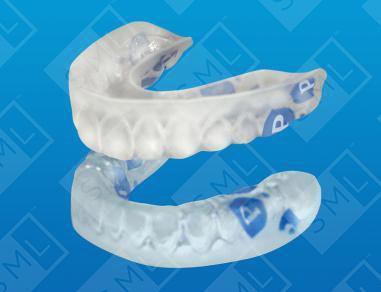
 No More "One Size Fits All": Sleep Appliance Therapy