



Blog
 According to the National Sleep Foundation, sleep apnea affects as many as 18 million Americans. Left untreated, it can lead to a multitude of health problems, including cardiovascular disease, memory loss, severe headaches, weight gain, and more. In many cases, sleep apnea results from a blocking or collapse of the individual’s airway during sleep. This, in turn, causes the sleeper to awaken dozens or even hundreds of times during the night.
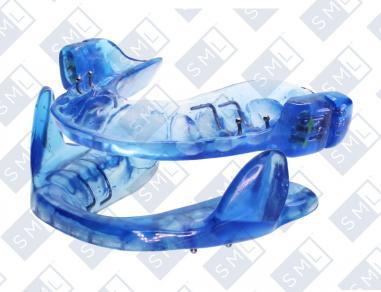
Dentists can help their patients effectively manage sleep apnea by selecting from an array of mandibular advancement appliances which push the lower jaw forward, keeping the airway open during sleep.
Any of the SML (Space…

Splints are generally classified according to their intended function. The two most common types of splints are the disengaging occlusal correcting splints and the mandibular or anterior repositioning splints.
Disengaging splints eliminate chronic and acute malocclusion and induce relaxation of the masticatory muscles. This is accomplished by introducing an optimum occlusal position, thus allowing a reorganization of the neuromuscular reflex activity and a deprogramming of the musculature.
Mandibular repositioning splints are used to prevent the disc-condyle complexes from returning to the fully occluded position…or to set the condyles in a more favorable condyle disc relationship in the fossa so that normal function can be established.
These splints are…
Dental Sleep Medicine: The Advanced Course 8 CE Credits

• Grinding or clenching breaks down enamel and can eventually reduce teeth to stumps.
• Absence of enamel makes it easier for bacteria to penetrate the softer part of teeth and produce cavities.
• As long as bruxism continues, the situation keeps getting worse.
“Although no hard and fast figures on the frequency of bruxism are available currently, it is known that 80% of all bruxers may be unaware of the habit (Thompson, Blount, and Krumholtz, 1994) or ashamed of it… and that evidence of the self-destructive behavior (worn teeth) may take years to actually appear.
Estimates of the prevalence ranges from 5% to 100% …but it can safely be said that at the very least, one out of twenty Americans brux.…