


Cart


Blog
Image
BlogBanner_02_0.jpeg

Blog

Blog SeriesAirway HealthGive a Child a Chance: The Urgency of Airway 

Pediatric space management is often the key to the prevention of potential disastrous abnormal conditions and/or dental problems which could persist into adulthood.

Once thought to be the sole responsibility of medical GP’s, the incidence of Obstructive Sleep Apnea is increasing significantly…and there is compelling evidence that many adult airway issues begin in childhood.

Many kids today that are diagnosed with ADHD (and prescribed medication accordingly) may suffer from an underdeveloped maxilla, a posterior placed mandible, and an airway problem which effects their oxygen saturation level.

Even something as simple as interceptive therapy to maintain space can positively affect the…

blog seriesAirway HealthEverybody wins: Early Pediatric Treatment and the Importance of Airway 

Early recognition and treatment of orthodontic and orthopedic issues is critical to the prevention of abnormal conditions and/or dental problems, which – if minimized or ignored – can persist (often disastrously, always expensively) into adulthood.

Consider the profound, continuing need for interceptive pediatric care – especially in light of all we are discovering regarding the nature and treatment of Obstructive Sleep Apnea. The message is clear: EVERYBODY benefits from it – often in potentially BIG ways.

Now compare the cost of early interceptive care to that of extensive orthodontics, surgeries, crowns and veneers, sleep therapy, and potentially psychiatric or…

Blog SeriesAirway HealthEarly Pediatric Treatment: The Dentist's Role In Saving Airway 

The responsibility for evaluating a pediatric patient’s oral health rests in the hands of the dentists and hygienists who will care for them for the rest of their adult lives. The dentist plays a key role at three procedural levels:  

Screening, Diagnosis, Treatment 

As pediatric, orthodontic, or general dentists we should be looking to create a normal skeletal relationship for the best intraoral volume and airway space, a healthy jaw joint, excellent facial esthetics and a proper solid occlusion.

Every dentist needs to be actively involved in the evaluation of pediatric arch size, tooth position, airway and facial development. Early evaluation, diagnosis and…

Blog SeriesAirway HealthEarly Treatment Options: Maintaining Space, Arch Length, and Airway 
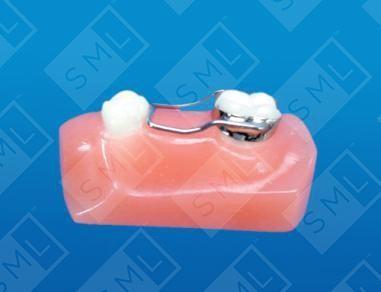
Early loss of a primary molar often causes the adult first molar to tip and move mesially. The basic unilateral space maintainer is ideal for holding the first molar’s position.  This simple appliance can maintain arch length; normal function and esthetics; and perhaps most importantly, intraoral volume, leading to improved airway health.

space maintainerForces generated during eating can cause a unilateral space maintainer to move gingivally at the loop,…

Blog seriesAirway HealthIntraoral Habits: Options for Early Treatment Intervention 

Early treatment intervention is essential when the dentist observes the formation (or imminent adoption) of an intraoral habit. Habits can cause skeletal open bites, Class II malocclusions and major airway issues.

Arch length loss has already occurred when you see an erupting six-year molar caught under the distal edge of a primary second molar. Leaving it untreated will block the normal eruption of the second bicuspid, diminish the child’s arch length and possibly affect the space needed for the tongue to rest normally.

…