

Cart


Blog
Image
BlogBanner_02_0.jpeg

Blog

Category 2: Mandibular Repositioners

Mandibular Repositioners (aka MAD’s, i.e. Mandibular Advancement Devices) are available in a variety of designs based on the needs and adaptability of the individual patient.  Appropriate planning and monitoring is important to assure success and avoid negative outcomes.  Numerous studies discuss the effectiveness of MAD’s in that they increase the airway diameter with soft tissue displacement by controlled and measurable mandibular protrusion.  The tongue is therefore affected either directly or indirectly by forward movement of the mandible which aids in preventing airway collapse. 

Studies show that MAD’s reduce the AHI (apnea-hypopnea index – the number of apnea and hypopnea events per hour of sleep.  Additionally, they improve…
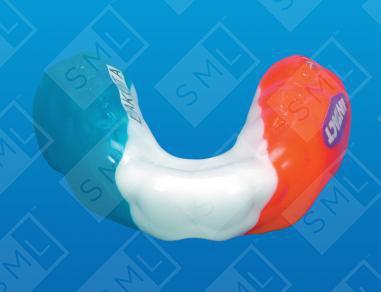
Intact youthWhy Offer Your Patients Mouthguards for Competitive Sports?

Participation in competitive sports at all levels, from youth to adult leagues has grown quite steadily over recent years.  With this growth, we have seen a commensurate increase in the number of injuries.  In fact, 10-20% of all sports related injuries are maxillofacial injuries according to the American Dental Association.  To protect your patient’s mouth we suggest everyone involved in playing competitive sports wear a mouthguard.

It is easy to assume mouthguards are only necessary if you are playing a contact sport. People understand if you are playing soccer, basketball, football, or ice hockey you need a mouthguard. But it is just as important to wear a mouthguard when you…

blog seriesCategory 3: Tongue Controllers, Combo Tongue Controllers and Advancement Appliances

Some patients simply cannot tolerate having their mandible brought forward. For others, such as a patient who already is a skeletal class lll, they would only be made more prognathic. Luckily there are alternatives to these posture forwarding appliances.

The following appliances work by acting directly on the tongue to prevent it from dropping back into the airway:

THE FULL BREATH SOLUTION®The FBS has an adjustable extension that reaches back and down towards the posterior aspect of the tongue. It is designed in such a manner that when the tongue drops back into the airway during sleep it makes contact with this extension. This contact stimulates the tongue to come forward while eliminating…

blog seriesCategory 4: Dual Action Appliances

It is fair to say patients who have crowded teeth and small or narrow arches will also have a greater chance of having an airway issue. This is the case because patients who have these problems have less intraoral volume for the tongue and a diminished nasal airway. Although these patients may benefit from a standard sleep appliance alone, it has become clear that combination therapy that also addresses their orthodontic needs may be a better approach.

THE ALIGNER SLEEP APPLIANCE (ASA)™The ASA is an appliance that can be worn to manage a patient’s apnea while they are undergoing aligner therapy to correct their malocclusion. To be successful at providing this combined approach it is necessary to coordinate the treatment plans between the…

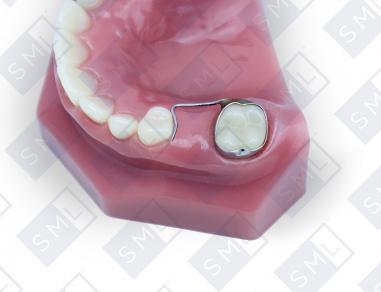
teethUsing a Space Maintainer as a cost effective temporary alternative for an Implant or Bridge

Do you have a patient who has recently lost one of their posterior teeth? A molar? A bicuspid? Whatever the reason may be that caused the lost of the tooth, they may not be able to afford replacing it right away. They may also feel it is not necessary to replace it since the gap isn’t noticeable to anyone.  As you know they are wrong!

It is imperative we tell them the risk factors in not replacing it. As you know leaving a space in a patient’s mouth can change their bite and lead to a host of other problems. Here is a list of just a few of the most common side effects. Malocclusion, poor chewing, clenching, grinding, and jaw pain are…