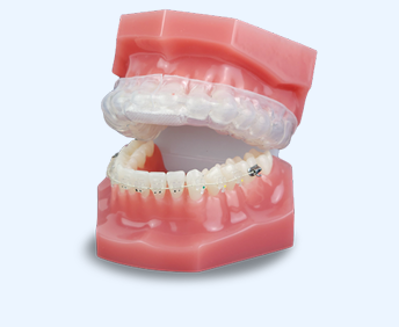
If you read only one post in this series, make it this one — because there's a population sitting in orthodontic chairs across your referral area, at documented elevated risk, that essentially nobody is protecting.
Start with the numbers
Fixed appliance treatment is concentrated in adolescence, which is a period of high dental injury incidence from leisure and sporting activity. The appliance makes things worse in both directions: it compromises the fit of a mouthguard — both by its own presence and through the tooth movement treatment produces — and it increases the extent of damage after an orofacial injury, through bracket debonding, archwire deformation, and soft tissue laceration.
And only about 35 percent of orthodontic patients report routinely wearing a mouthguard during sport.
Why so low? Because there's been almost no evidence-based guidance in this area, so orthodontists differ significantly in the advice they give. Some have expressed concern that a custom guard might be too adaptive and could prevent desired tooth movement — a concern that, as the trial authors themselves note, has never been formally studied.
So the field defaulted to the "ortho channel" guard and the instant-fit silicone guard.
What the data says about those products
Two papers, both published in the European Journal of Orthodontics in 2022, both open access. Read them. Then forward them.
The impact study. Researchers tested seven mouthguards on a typodont bonded with a 0.022 × 0.028 appliance and 0.017 × 0.025 stainless steel archwire. Three of the seven — including the pre-fabricated instant-fit type — were displaced from the typodont after every single impact, and had to be excluded from load comparison entirely on that basis. All three custom-made designs stayed retained throughout.