


What You Can Say About Concussions — and What Will Get You in Trouble
If you learned about mouthguards from continuing education delivered before roughly 2019, some of what you learned is out of date — and at least one thing you may still be telling parents is a regulatory liability.
Here's the good news before the caution: the newer literature gives you a better story than the old one did. You no longer have to defend a speculative biomechanical mechanism. You can point to actual human populations. 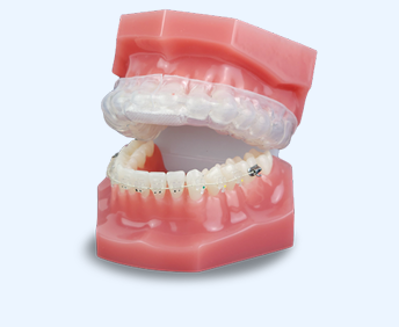
Start with what is settled
Mouthguards reduce dental and orofacial injuries. That evidence is strong.
- Non-users carry 2.33 times the risk of orofacial injury compared with users (95% CI 1.59–3.44), across twelve cohort trials in a 2019 meta-analysis in Sports Medicine.
- Dental trauma prevalence was 7.5 to 7.75 percent among mouthguard users versus 48.31 to 59.48 percent among non-users in a 2019 systematic review and meta-analysis in Dental Traumatology — users were 82 to 93 percent less likely to sustain a dentofacial injury.
- The IADT and the Academy for Sports Dentistry jointly state that mouthguards are effective in preventing dental injuries and are recommended across the many sports carrying increased risk.
- The European Association for Sports Dentistry identifies custom-made sports mouthguards as the most effective means of preventing these injuries, providing protection and comfort without impairing athletic performance.
Say this category of claim without hedging. It is well supported and the ADA has promoted it for more than fifty years.
Now the concussion question, carefully
The ADA's mouthguard review, last updated August 18, 2025, describes the evidence on concussion reduction as relatively mixed and less consistent than the evidence for orofacial and dental injuries.
The ADA doesn't just assert that — it shows its work, and the specifics are instructive. A 2002 study of college basketball players found no significant difference in concussion rate between users and non-users. Two 2014 studies of high school football players reached opposite conclusions: one found a higher concussion risk among custom mouthguard users compared with over-the-counter users, the other found a significantly reduced risk among custom users.
That is what "mixed" actually looks like. It is worth knowing in detail, because a well-read parent or athletic trainer may have found one of those studies.
Here is each major finding, stated precisely.
The 2019 meta-analysis — a nonsignificant association favoring mouthguards. Knapik and colleagues evaluated five cohort studies for concussion and reported a summary relative risk of 1.25 (95% CI 0.90–1.74) comparing non-users with users. Because the confidence interval crosses 1.0, the finding was not statistically significant.
Note the nuance: the point estimate favored mouthguard use — an estimated 25 percent higher concussion risk among non-users — but the result did not reach significance. Describe it that way. Saying flatly that the review "found no concussion effect" is imprecise in the other direction and understates the data.
The 2023 BJSM systematic review — a significant protective association in collision sports. Eliason and colleagues evaluated 192 studies of concussion-prevention strategies and modifiable risk factors. Their meta-analysis found mouthguards associated with a significant protective effect in collision sports: IRR 0.74 (95% CI 0.64–0.89), approximately a 26 percent lower incidence rate.
This is the finding that legitimately moved the discussion off the older "there is no evidence" position.
The youth hockey cohort — your most persuasive evidence. Kolstad and colleagues followed 3,330 youth ice hockey players ages 11 to 18 across multiple seasons. Players reporting mouthguard use had a 28 percent lower concussion rate (IRR 0.72, 95% CI 0.56–0.93) and 57 percent lower odds of concussion (OR 0.43, 95% CI 0.27–0.70) than non-users. The authors' own language is that mouthguard wearing was associated with lower concussion rate and odds.
For a hockey parent, this is the study to cite. It's sport-specific, age-specific, and drawn from a real population rather than a laboratory.
Retire the mechanism
For decades, dental and sports-dentistry literature — including our own earlier publications — repeated the explanation that a mouthguard protects the brain by separating the mandibular condyle from the base of the skull, thereby reducing skull deformation and intracranial pressure.
Stop presenting that as an established clinical mechanism.
Those ideas arose largely from biomechanical, cadaveric, and laboratory observation. They are hypotheses about potential force attenuation. They have never been demonstrated as a clinical mechanism of concussion prevention in humans.
The ADA is notably careful here, and worth following. Rather than endorsing any specific mechanism, it states that further research is needed to determine whether concussion-risk reduction occurs through mechanisms such as absorbing or dissipating forces, or stabilizing the head and neck.
So remove not only "the mouthguard separates the condyle from the skull and thereby prevents concussion" — but also the softer version, "and thereby reduces concussion risk." Both attribute causality to a mechanism that hasn't been demonstrated.
This is not academic caution — the FTC has acted
In August 2012, the Federal Trade Commission announced a settlement with mouthguard marketer Brain-Pad, Inc. and its president. The Commission alleged the company lacked a reasonable basis for claiming its mouthguards reduced the risk of concussions from lower-jaw impacts, reduced the risk of concussions generally, and had been clinically proven to do either. The final order, approved in November 2012, prohibits those claims and bars misrepresenting the health benefits of any mouthguard or other athletic equipment designed to protect the brain from injury.
"Mouthguards can help to shield a person's teeth from being injured, and some can reduce impact to the lower jaw," the FTC's Bureau of Consumer Protection director said at the time — but calling that concussion protection was a leap the science didn't support.
After the order became final, FTC staff sent warning letters to 18 other sports equipment manufacturers about potentially deceptive concussion-protection claims, and the agency has since followed up with retailers as well.
If you publish anything — a website page, a brochure, a social post — this applies to you.
A three-level claims policy for your practice
Adopt this and you'll never have to think about it again.
Level 1 — state without qualification:
"Mouthguards reduce dental and orofacial injuries."
Level 2 — state with appropriate qualification:
"Emerging evidence indicates that mouthguard use is associated with a lower incidence of concussion in some collision sports. A 2023 systematic review found approximately a 26 percent lower concussion incidence among mouthguard users, and a study of more than 3,300 youth hockey players found a 28 percent lower concussion rate among players who wore mouthguards."
Level 3 — never say:
- "Mouthguards prevent concussions."
- "Mouthguards protect the brain from concussion."
- "This mouthguard prevents concussion by separating the condyle from the skull."
- "Our mouthguard reduces concussion risk by 26 percent."
That last one deserves particular attention, because it's the mistake a well-intentioned marketing person makes without noticing. The 26 percent figure applies to pooled mouthguard use across the studies included in that meta-analysis. It does not substantiate a 26 percent risk-reduction claim for any particular branded product. Attaching a population-level pooled estimate to your specific appliance is precisely the kind of representation the FTC order addressed.
The sentence I'd use
If you want one formulation that is scientifically defensible and still does real persuasive work:
"Mouthguards are proven to protect the teeth and mouth from sports injuries. In addition, growing evidence suggests that mouthguard use is associated with a lower incidence of concussion in some collision sports — although mouthguards should not be represented as preventing concussions."
Precision is more convincing than enthusiasm. The orthodontist you want referring to you can read. So can the athletic trainer, the team physician, and the parent with a search engine.
The practices that win the sports dentistry channel over the next five years will be the ones whose claims survive being checked.
References
Knapik JJ, Hoedebecke BL, Rogers GG, Sharp MA, Marshall SW. Effectiveness of mouthguards for the prevention of orofacial injuries and concussions in sports: systematic review and meta-analysis. Sports Med. 2019;49(8):1217–1232. doi:10.1007/s40279-019-01121-w
Fernandes LM, et al. Dent Traumatol. 2019;35(1):54–72. doi:10.1111/edt.12441
Abbott PV, et al. IADT/ASD guidelines Part 3: Mouthguards. Dent Traumatol. 2024;40(Suppl 1):7–9. doi:10.1111/edt.12925
Avgerinos S, et al. Position statement and recommendations for custom-made sport mouthguards. Dent Traumatol. 2025;41(3):246–251. doi:10.1111/edt.13019
American Dental Association. Athletic mouth protectors (mouthguards). ADA Oral Health Topics. Prepared by Research Services and Scientific Information, ADA Library & Archives. Last updated August 18, 2025.
Eliason PH, et al. Br J Sports Med. 2023;57(12):749–761. doi:10.1136/bjsports-2022-106656
Kolstad AT, et al. Br J Sports Med. 2023;57(10):571–577. doi:10.1136/bjsports-2022-105585
Federal Trade Commission. Settlement with FTC prohibits marketer Brain-Pad, Inc. from claiming that its mouthguards can reduce risk of concussions. August 2012; final order approved November 2012.