Cart


Lab Processing Times

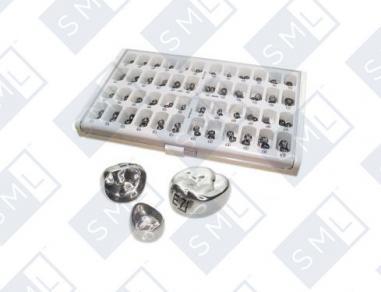
KTRcrown_smlglobal_0_2Is there ever a time when you should recommend stainless steel crowns to your patient?

If the child’s teeth are seriously decayed to the point where filling with lesser material will fail – especially true when the patient has received a pulpectomy – then Stainless Steel Crowns are likely the order of the day.

 A stainless steel crown can prevent further decay and allow the child to eat, chew, and speak normally until the permanent teeth erupt. There are certainly more esthetic pediatric crown options, e.g. Pedo Jackets or Strip Crowns. These options are, however, more expensive. For those patients that require basic care, a stainless steel crown is certainly better than extraction therapy or no treatment at all.  

Also keep in mind…

   Read More 

Blog Graphic _all3_1Sounds a bit off, I know. In reality, several minor tooth movement appliances can double as a final retainer. The prime example would be a patient who you have identified as having minor anterior crowding, (maybe post-orthodontic relapse but not necessarily).  This can easily be fixed with a Spring Hawley Retainer or an Inman Aligner. 

Here’s how it works: You take a set of traditional or digital upper and lower impressions. The lab will use these to do a computerized space analysis which allows them to set the teeth into an ideal position and fabricate an appliance to that correction which will slowly move the teeth and correct the crowding.

The computer analysis will also allow the lab to provide you with a template on where you will need…

   Read More 

Final Retention: It's On Yousmlglobal-finalretention5_0

In order to maintain both esthetics and function achieved via orthodontic therapy, final retention is not merely an option. It’s a necessity.

Since most patients never return to the orthodontist after treatment after is completed, the general dentist is the sole line of defense for providing continuing and indefinite retention services – specifically, a regular post-orthodontic/permanent retention program for his or her patients.

PRIORITIES

Include retention information as part of every patient’s formal pre-treatment informed consent documents. They should remind patients at the end of orthodontic treatment that indefinite retention is a must – even when they leave the orthodontists care and return to…

   Read More 

dentallabs_2New Year, New Dental Lab?

It’s never a bad idea to shop around every once in a while to make sure you’re getting the best quality, best service, and best prices on the products that you buy the most often.

This is especially true when it comes to your dental practice. If you’ve been working with certain vendors for many years, you may not realize that you could be getting better deals.

For example, does your dental lab typically ship later than promised? Misplace your files? Get your order wrong? Loyalty is admirable, of course, but chances are, other dentists you know are getting better service…perhaps even the same appliances for a better price.

This new year, maybe it’s time to take a new look at how other vendors might improve your bottom line.

SML…

   Read More 

SML Color Chart_0_1

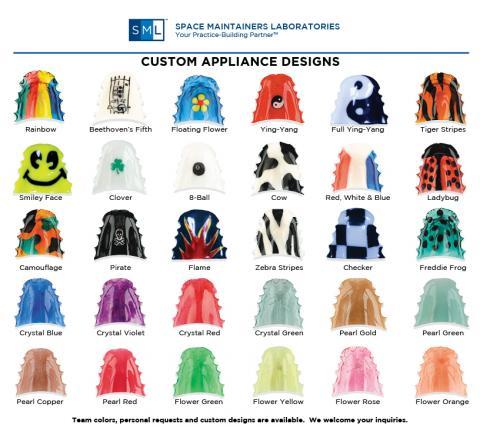
How to Get Your Patients to Wear Their Retainers?

Getting your young and teenage patients to wear their retainers regularly can be a bona fide challenge. You can explain that retainers serve the necessary function of “retaining” their teeth after braces. You can jog their memory to the fact that their parents have worked hard to help them have a beautiful smile.  Promise, plead, cajole…

Realistically, these approaches are likely destined to fall on deaf ears – especially in view of the fact that most young patients are not really “invested” in their retainer. They didn’t pay for it, they didn’t pick it, they didn’t help design it

Why not improve their compliance by providing them with multiple retainer designs to choose from – stripes…

   Read More 

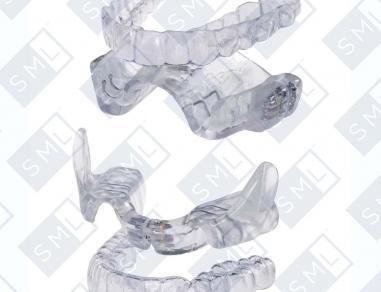
Blog Graphic _Sleep2_0Clear Directions: Sleep Appliance Therapy

After you have treated your first two or three sleep patients it likely becomes quite clear (if it wasn’t already) that no one appliance will fit the bill (or the dentition) for every patient

Each appliance has it’s own limitations and every patient is different. For example:

• One type of appliance may hold the upper and lower jaw firmly together. For someone who is a mouth breather, this…

can prove to be nothing short of torturous. Claustrophobia… and failure.

• Or let’s say your appliance of choice is retained in the patient’s mouth by grabbing the undercuts that naturally occur in the dentition.  If the patient doesn't have enough back teeth to anchor the appliance, the appliance…

   Read More 

Blog Graphic _Sleep3_0Parameters of Success: Sleep Appliance Therapy

To be successful in deciding upon the right sleep appliance, you need to know:  

1. Materials, qualities, design and functional specifics of the different appliances. Hard acrylic? Cad-Cam Appliance? Does it allow lateral movement? Is it easily adjustable for patient and/or doctor? How is it retained – ball clasps and clasps? Is it lined with thermoplastic material? Can you adjust it and realign it easily?

2. What are the controlling parameters in relation to the patient? You will need to perform a full and complete dental sleep examination and a TMJ exam. What are the number of teeth in both arches? Any signs of periodontal disease or decay? Are there…

broken fillings or crowns that…

   Read More 

Treatment Options: Sleep Appliance Therapy

Because every patient is different, here are some sample combination approaches for your consideration:Blog Graphic _Sleep4_0

ASA_watermark_1   Standard-Acrylic-based-DNA-Appliance_1

The Aligner Sleep Appliance™ (ASA)   and  the DNA Appliance

I think it’s fair to say that there is a direct…

   Read More 

Blog Graphic _Sleep5_0Game Changes: The future of Sleep Appliance Therapy
What does the future hold? In addition to that steady stream of new designs spoken of earlier …and ongoing research and development into the utilization of low level oxygen delivery/mechanisms for treating OSA, there’s another emerging trend/concept/awareness that has my immediate attention: the application of microchips in what I term “accountability therapy.”  

The next step toward higher percentage sleep therapy effectiveness needs to be made in the area of patient accountability. We must be able to make sure that our appliances are actually being used. Taking a sleep test to show that the appliance works when it’s worn just isn’t enough. We’re going to have to show that the patient is…

   Read More 

digital-scans-dentist_0Time to Increase the Accuracy of Your Impressions with Intra-Oral Scanners

Is your dental office still trapped in the stone age of traditional impressions? Not only is this method slow, it can also prove dangerously inaccurate!

The newest generation of intra-oral scanner – notably the Condor Scanner -- is better than ever. We’re talking 3D color digital impressions that pop up instantly on your computer and can be sent directly to your dental lab of choice.

Not only does an intra-oral scanner dramatically cut down on the time it takes to complete an impression, but it also delivers more accurate results. The result: better oral device from you, better outcome for your patient.

Worried about the cost? Keep in mind that because choosing an…

   Read More