

Cart


Blog
Image
BlogBanner_02_0.jpeg

Blog

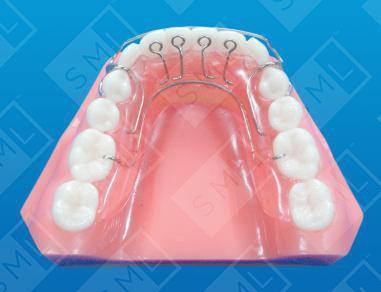
Bloore alignerYou Don’t Have to Re-bracket When Relapse Threatens

As an orthodontist, you know that a certain number of patients just aren’t going to wear their retainer consistently no matter what you say to them or how many times you say it. That being said, it comes as no small surprise that relapse is as common as it is.

Consider the Bloore Aligner. Because you can’t force these patients to wear their retainer and you’ll never get them to go back into brackets once relapse begins, you need options!

The Bloore Aligner is an ideal choice for correcting minor crowding in the upper or lower incisors – without requiring braces. Springs are placed lingual to each incisor and are individually activated to move teeth back into alignment. SML Global is your…

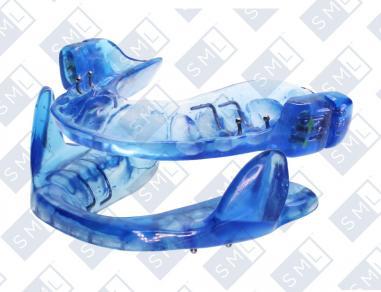
Dorsal betterFinding the Best Dental Appliance for Sleep Disorders

So many people have problems sleeping or they may not breath correctly while sleeping.  Appliance Therapy can be the answer and patients will be happy with help with their sleep issues.

Every patient is unique, every sleep disorder the result of patient-specific habits and conditions. As such, careful selection of the proper appliance for the individual patient is vital to ensuring treatment success. 

Providing superior fit, retention and comfort, the SML™ Dorsal utilizes precision-milled upper and lower occlusal splints to open the vertical relationship while holding the mandible in the desired forward position. Interlocking buccal inclines allow a desirable degree of mandibular lateral…

Andra GaugeTM Captures the Ideal Bite Registration that is Precise, Accurate, and Reproducible
Benefits:The Andra GaugeTM is the only disposable single-use bite registration device available that can dial in and lock in place the anterior, posterior, vertical, and sagittal position of the mandible in relation to the maxilla, making it…

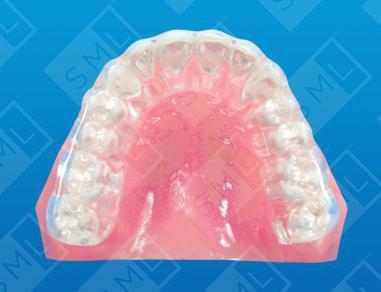
Talon splintsChronic bruxism may lead to sensitive, decayed, fractured, loose or missing teeth. Grinding or clenching breaks down enamel and can eventually wear teeth down. The absence of enamel makes it easier for bacteria to penetrate the softer part of teeth and produce cavities. As long as bruxism continues, the situation worsens.

Successful management of bruxism depends firstly upon determining whether or not it is caused by a sleep disorder. If this is the case, treat the sleep problem first. Once it has been confirmed that there is no sleep dysfunction, the focus should be on minimizing the abrasion of tooth surfaces by the wearing of a dental splint on the individual’s upper or lower teeth.  When you consider the need tor interceptive care — not just…