Before Closing Space Between Teeth, Make Sure You Understand the Cause

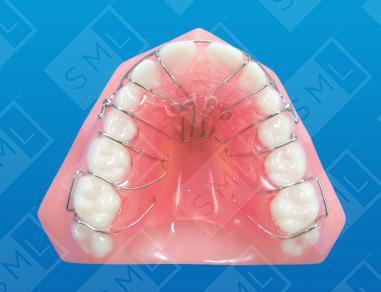
closing space oral devicesYou have a patient who comes in with a gap between their teeth, or perhaps they present with flared anteriors. They want a straight, beautiful smile, but before you fit them with an oral appliance to close the space, you need to determine its cause.

If the space is a result of bad habits or disease, additional treatment will be required to ensure that the issues don’t simply return.

Bad Habits

Two of the most common causes of flared anteriors are tongue thrusting and bruxism (teeth grinding) at night. In the case of tongue thrusting, closing the space won’t do the patient any good until they correct their bad habit. As soon as their smile is straightened, the tongue thrusting will begin pushing the teeth back out again.

  Read More

Location

United States
40° 45' 21.7368" N, 94° 49' 25.266" W

Selecting The Correct Category / Fitting & Follow-Up

Selecting The Correct Category / Fitting & Follow-Up

Dental appliances are the #1 non-surgical treatment solution recommended by the Academy of Sleep Medicine when the CPAP cannot be tolerated. They are an effective solution for snoring problems and for patients with mild or moderate Sleep Apnea.

Our experience tells us that the successful clinician – in order to effectively address the range of sleep dysfunction that he is likely to encounter – needs to offer at least 9 appliances in his sleep armamentarium (one test appliance and two in each of four remaining representative categories) in addition to some provision for morning positioning.

  Read More

Location

United States
40° 45' 21.7368" N, 94° 49' 25.266" W

Working The Dentist – Physician Team / Diagnosis & Data

Working with your patient’s doctor - or a sleep specialist - to make sure that the patient has been properly evaluated and diagnosed is essential. It is the “how” that is important. Most view this step as a hindrance…it is not.

Working with the medical community protects you legally, increases opportunity for referrals and keeps you within the scope of your practice.

“Can’t tolerate CPAP? I know a dentist that is treating with appliances…you might work with him.”

New technology ensures that the dentist can function as an integral part of the screening process.

IT IS ESSENTIAL THAT THE SLEEP PATIENT BE TESTED WITH A HOME SLEEP TESTING DEVICE OR AN OVERNIGHT- ATTENDED PSG.

ALWAYS follow-up with your patient’s sleep physician (and any other treating physicians) with regard to status of your mutual patient.

  Read More

Location

United States
40° 45' 21.7368" N, 94° 49' 25.266" W

Understanding Sleep and Your Role

Understanding Sleep and Your Role

Numerous appliances are presently available and viable for treating snoring and OSA. They are also appropriate for those patients who cannot tolerate a CPAP or are unwilling (or unable) to endure surgery.

Appliance designs vary according to desired method of retention; type of material used; method and ease of adjustment; level of vertical control provided; differences in mandibular movement; and finally, whether or not the appliance is lab- or office-fabricated. Concerns factored into design selection include:

  1. TMJ health
  2. Orthodontic / Orthopedic concerns
  3. Periodontal structures and
  4. Number and relative overall health of teeth

In order to create interest and generate confidence in a problem/ solution-focused dental sleep practice, dentists and support staff must first receive the necessary education and training in the basics of Dental Sleep Medicine – specifically case selection; diagnosis; proper appliance selection and use; titration; and follow-up.

  Read More

Location

United States
40° 45' 21.7368" N, 94° 49' 25.266" W

Wake Up to SLEEP Dentistry!

The Issue:

ONE MILLION AMERICANS SNORE. A study published in Sleep Magazine found that as many as 92% of middle-aged men and 83% of middle-aged women may have undiagnosed moderate-to-severe Obstructive Sleep Apnea (OSA).

The American Academy of Sleep Medicine recommends oral appliances and CPAP as the #1 treatments for mild and moderate Sleep Apnea. The CPAP industry generates upwards of four billion dollars each year.

Of those patients who try CPAP, 50-75% reject the mask…and are searching for an alternative.

Their search in turn creates a driving demand for appropriate treatment modalities, an availability of at least two billion dollars annually for addressing said need, and an undeniable, unprecedented opportunity for personal success, financial reward and professional fulfillment in the field of Sleep Dentistry.

The Opportunity:

For nearly 30 years, SML® has led the way in dental sleep appliances and results-driven sleep education.  We know sleep…and we know how to make it work for you.

There is no better time for integrating a new specialty into your practice. The opportunity is three-fold:

1.  EXISTING PATIENTS – Sleep patients already exist in your practice. Have you been screening your patients for sleep dysfunction?

  Read More

Location

United States
40° 45' 21.7368" N, 94° 49' 25.266" W

Increase Your Income: Help Your Patients Combat Snoring

Sleep Apnea Dental AppliancesLooking for ways to increase practice income in the new year? You already know that bringing in new patients takes a lot of time and effort. A popular business dictum is “the best new customer is the customer you already have.”

Instead of focusing on finding new dental customers (especially if you work in a low-population or highly competitive area), consider how you can offer more to your existing customers. One great option? Anti-snoring oral appliances.

According to the Sleep Foundation magazine, roughly 90 million American adults snore. That snoring can make life miserable for a sleep partner. No one wants to receive an elbow in the gut in the middle of the night or get banished to the couch downstairs because of their snoring. By offering to treat patients who snore, you could be creating a much more harmonious household!

Snoring and Sleep Apnea

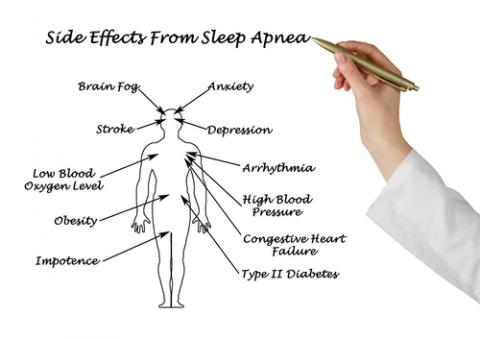
Heavy snoring on a regular basis may be an indication of obstructive sleep apnea (OSA). This ups the game considerably -- negatively and (often significantly) impacting patient health. OSA sufferers are denied the refreshing sleep they need to feel awake, energized, and clear-headed during the day.

  Read More

Location

United States
40° 45' 21.7368" N, 94° 49' 25.266" W

Splint Therapy Using the Talon Splint

“For patients with crowns or bridges, bruxism may cause porcelain fracture and failure of the restoration. Implant complications are more likely in people who habitually clench or grind their teeth (Perl, 1994, Nishimura et al., 1997)

The Talon® Splint

“Talon” refers to the soft thermoplastic resilient polymer used for the retentive portion of the splint. It maintains its original flexibility for years, thus eliminating the need for any other form of mechanical retention. Hard acrylic is chemically bonded to the talon material, comprising the splint’s occlusal surface.

Superior Fit and Retention, Speech-Friendly Comfort

Talon’s soft thermoplastic resilient polymer provides the comfortable fit of a soft material while providing the positive retention needed to maintain an appliance in the mouth without the use of clasps. Hard acrylic is then bonded to the Talon material to give you the superior protection of a hard splint.  Read More

Location

United States
40° 45' 21.7368" N, 94° 49' 25.266" W

Have You Heard About our SML Webinar Series for Dentists and Orthodontics?

Ortho & Dental WebinarsThe fields of dentistry and orthodontics continually evolve as we seek new and better understandings on how to effectively treat the myriad dental issues we face in our practices. As a dentist or orthodontist, you can’t afford to stop learning, or you’ll be doing your patients a disservice.

Here at Space Maintainers Laboratories, we are proud to introduce our new SML Webinar series. Each webinar features an expert speaker who will dive deep into an important topic. They may address a fascinating case study, discuss a new treatment protocol, or examine challenging diagnosis.

Our series is still relatively new, but we already have several webinars posted from speakers, including:

  Read More

Location

United States
40° 45' 21.7368" N, 94° 49' 25.266" W

Splint Therapy - Bruxism & Temporomandibular Disorders (TMD)

Bruxism is believed by most researchers to be one of the leading causes of temporomandibular disorders (TMD) (Blaros, Tabacchii & Glass, 1998; Israel et. al., 1999;Yustin et. al., 1993).

         THE FIRST WARNING SIGNS OF TMD

         • TMJ discomfort or pain

         • Soreness of jaws and muscles

         • Clicking or popping sounds when opening jaws or chewing

         • Difficulty in fully opening mouth

  Read More

Location

United States
40° 45' 21.7368" N, 94° 49' 25.266" W

Splint Therapy - The truth about BRUXISM…

Let’s begin with a few key points:

• Grinding or clenching breaks down enamel and can eventually reduce teeth to stumps.

• Absence of enamel makes it easier for bacteria to penetrate the softer part of teeth and produce cavities.

• As long as bruxism continues, the situation keeps getting worse.

“Although no hard and fast figures on the frequency of bruxism are available currently, it is known that 80% of all bruxers may be unaware of the habit (Thompson, Blount, and Krumholtz, 1994) or ashamed of it… and that evidence of the self-destructive behavior (worn teeth) may take years to actually appear.

Estimates of the prevalence ranges from 5% to 100% …but it can safely be said that at the very least, one out of twenty Americans brux. Most likely, one in four.”

  Read More

Location

United States
40° 45' 21.7368" N, 94° 49' 25.266" W

Pages